aesthetics as a reflection of game design
Apr 19, 2026
My first semester in echoes was filled with new experiences: this was my first time working within one of RIT's Vertically Integrated Projects and I was fortunate enough to pitch a game, Smoke & Mirrors, as a part of echoes' "Resonant Voices" games, where their concepts and messages were informed in part by interviews from prominent Rochester activists.
I first pitched Smoke & Mirrors at the tail-end of fall semester, during a preparatory meeting for games to be developed for Resonant Voices. An interview with Henry Padrón-Morales, an activist-educator and co-owner of Hipocampo Bookstore, served as the primary inspiration for Smoke & Mirrors' concept.
Throughout this semester, the design, development, and iterative testing of Smoke & Mirrors resulted in a game that is very different from what it was initially conceptualized as, and in this journey, the decisions I made for the visual aesthetic of this game changed as well.
Step One: Ideation
As mentioned previously, a transcript of an interview that a couple of echoes members had conducted with Padrón-Morales served as the foundation for Smoke & Mirrors' central message and design. I really connected with his discussion of how cultural education can strengthen an otherwise divided or discordant community.
I was especially intrigued by Padrón-Morales' mention of Theatre of the Oppressed, a community-based educational framework developed by the late Augusto Boal, in which theater performances are used to stimulate real-world systemic injustices and oppression, acting as a vehicle to inspire tangible social and political change. Specifically, I was drawn to the sub-practices of analytical theater and photo-romance, both of which focus on individual introspection and how societal standards influence our collective and personal way of thinking.
The majority of the design choices I had made come pitch were completely spontaneous: I first looked at Wayang, a traditional Javanese shadow puppet theater practice, for the ornateness and detail of their puppets. Wayang theater also drew my attention due to the unique stylization of the human figure in puppet form, as well as how traditional and religious patterns and iconography were incorporated into the design.
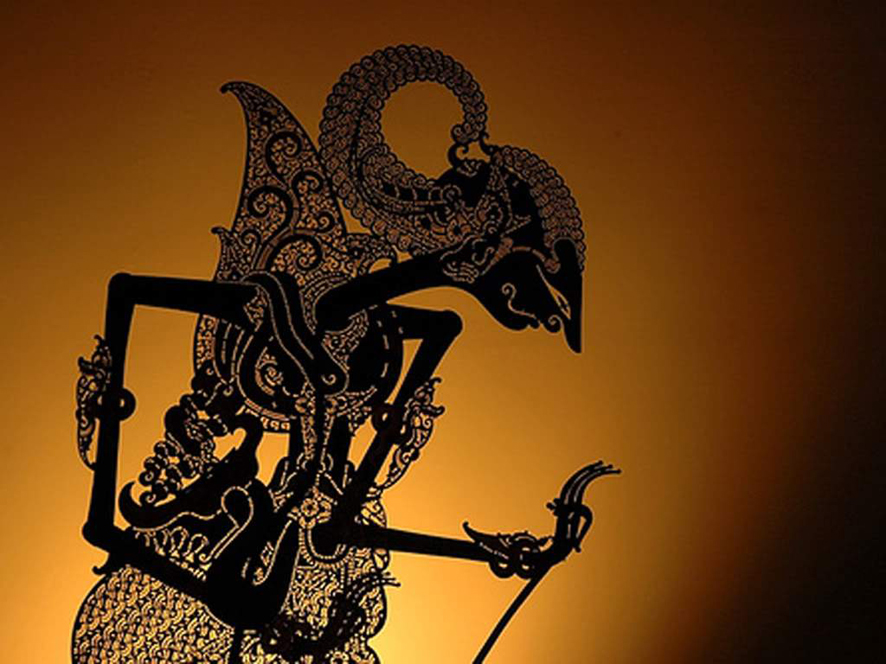
Perhaps more importantly, since Padrón-Morales put such emphasis on cultural representation and education in his life work, I wanted to include that same thinking within the visuals of the game, in giving homage to some under-represented or overlooked cultural practices around the world, especially those that had survived through colonialism, like in the case of Wayang. This would later be a choice that I grappled with heavily when defining the visual aesthetic of the game.
Step Two: Planning
The planning that I did for Smoke & Mirrors mainly concerned the central theme of the game and how gameplay would connect to that, which I outlined briefly in my initial pitch document.
This was one of the first times that I had made a high-concept document for a game, and there were a lot of questions I had to ask myself to create a cohesive document, principally, what is the purpose of this game?
From my research on Theatre of the Oppressed, I wanted to create an experience that prompted the same introspection that analytical theater did. My primary goal was to strike a juxtaposition between one's "perceptions" and the overall "truth", in that what the player sees in-game is not necessarily an accurate representation of what is actually happening. Essentially, the game would compel the player to rethink their initial perceptions and be more careful with the decisions they make in-game.
To accentuate this thought process, Smoke & Mirrors would take the form of a puzzle game, where success was determined by how well the player adapted to changes in their environment. As a complement, the puppet and prop designs could be very detailed, ornate, and heavily stylized, so that the player would have to consider multiple interpretations of the same puppet and prop forms.
At this point in design, I was still drawing heavily from Wayang theater but began incorporating other similar shadow puppet theater practices from around Asia, especially Chinese shadow puppetry.
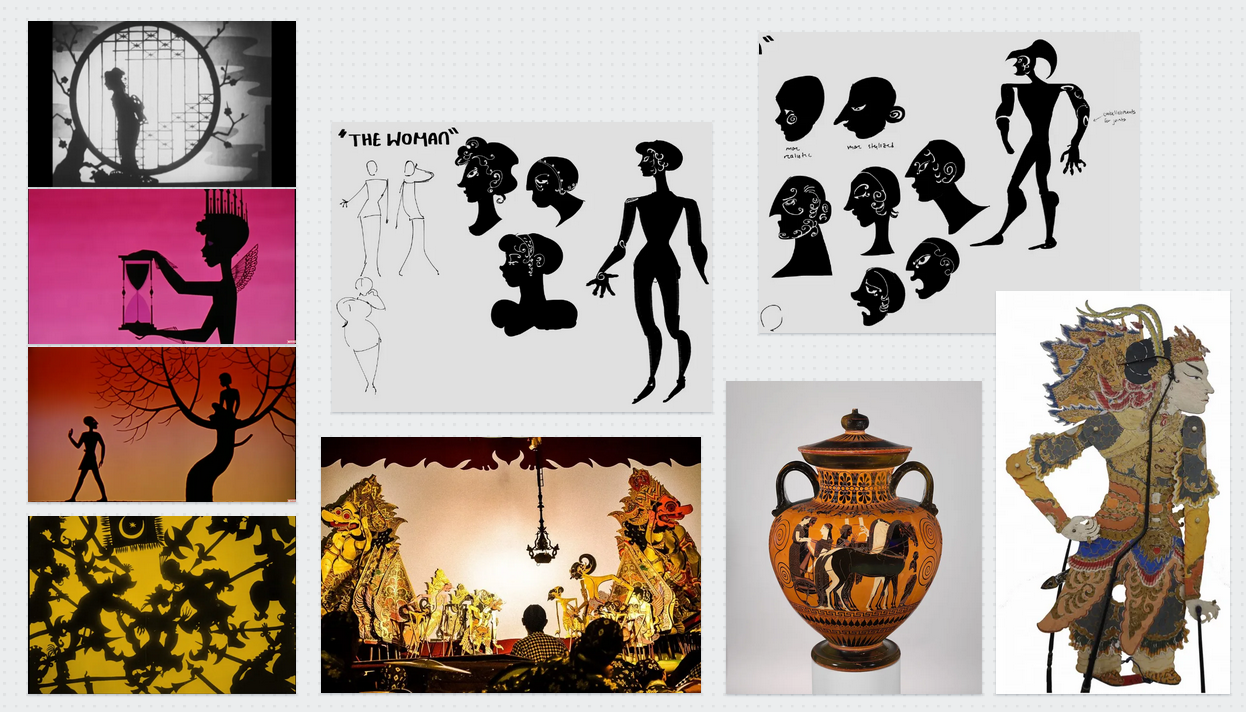
The film Princes et Princesses was also a major source of inspiration for the aesthetic of the game, since it displayed a range of stories with varying themes and emotional backdrops. Within these stories, emotional beats were signified by the background changing color, a good example of a similar system that we wanted to use in Smoke & Mirrors.
Step Three: Catching Up With Design
Our first few meetings as a team were devoted to hammering out the specific gameplay mechanics and game loops that would comprise Smoke & Mirrors.
From the initial puzzle-like game design, we exchanged ideas of how that might be executed. My initial pitch was not very detailed in terms of how gameplay may actually be implemented, so we were floundering around in trying to find a solid starting point to begin development.
Over the course of design ideation, the gameplay loop changed significantly. Smoke & Mirrors went from being a puzzle game to a sandbox, and in this transformation, the core message was interpreted in a much more abstract way. We aimed for the player to reckon with how their understanding of the world or any message that they wanted to communicate-- represented by a puppet and props in a theater-- may be seen and interpreted by others within the same world. Because of this gap in communication, we wanted the player to approach their method of creation carefully and purposefully. As a result, the player was able to interact with the theater environment, albeit in a much more limited way.
The colored backdrops now carried huge significance in this sandbox Smoke & Mirrors, since it carried far more information about the player's created scene than the puppet and props themselves. The emotional context it provided could completely transform the interpretation of a scene.
To facilitate this idea of the puppet being viewed and thus interpreted in many different ways by different people, the aim then shifted to reducing some of the ornate designs as seen in Wayang and simplifying them. A little unintentionally, this simplification led to the puppets looking more Grecian in nature. I still wanted to maintain a more Asian influence within the visuals of Smoke & Mirrors, so I went back to the backdrops, which were, at this point, a major element in gameplay.
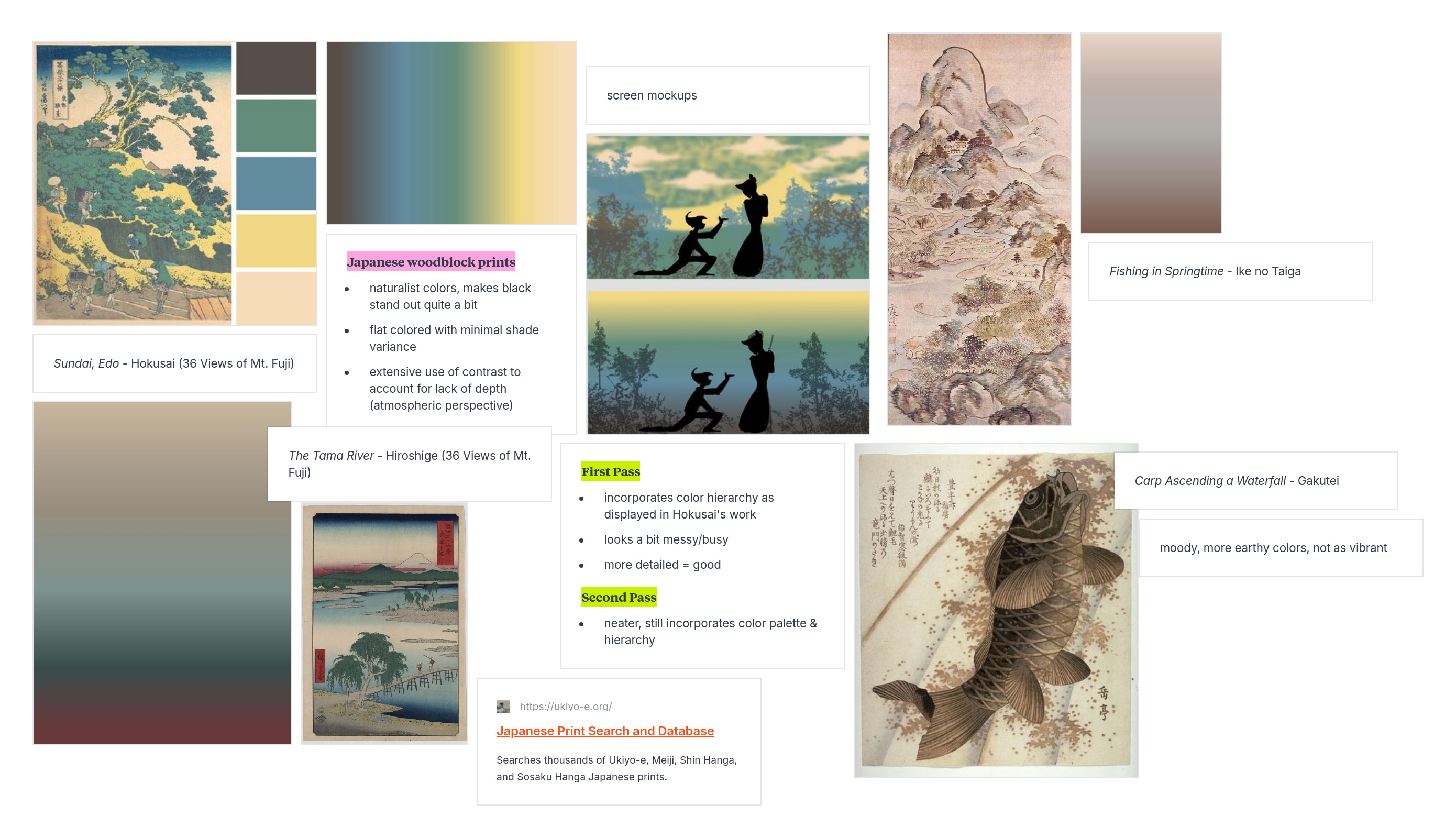
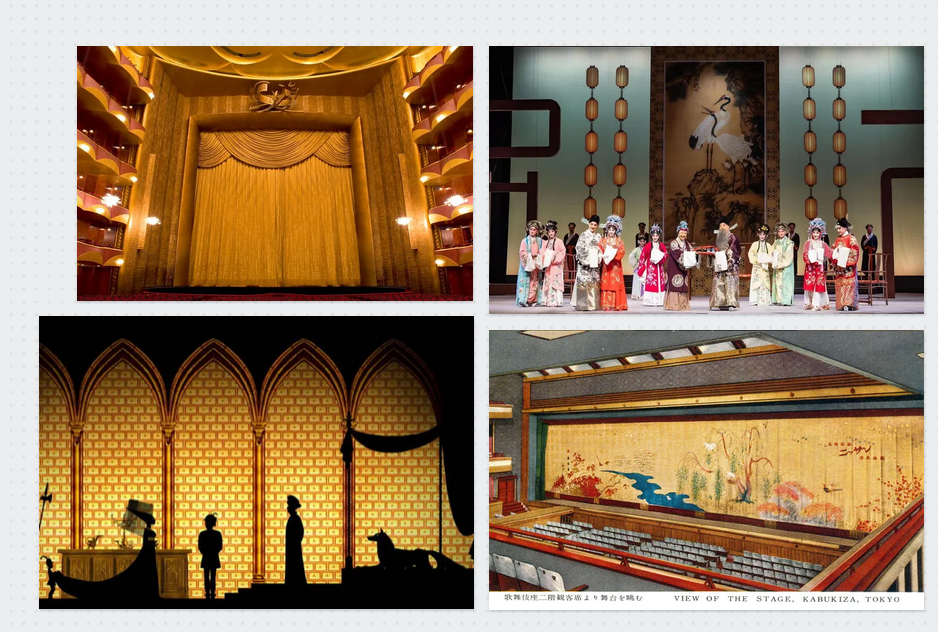
By this time, the visual design was taking more and more inspiration from theater traditions as a whole, but continued to focus on Asian theater practices specifically, like Japanese kabuki theater and northern Chinese Beijing opera. I will later use these inspirations to model backgrounds and UI assets around.
Wrapping Things Up
echoes was one of the first projects that I worked on where the visual design and game design were developed in tandem, and it formed this really intriguing relationship where the aesthetic of the game was meant to uplift the gameplay itself, and vice versa. Overall, I am immensely satisfied with the work I did towards Smoke & Mirrors this semester, and I am excited to continue the visual development of this game this fall.